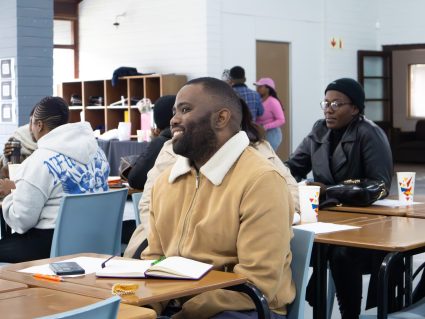
The Vulamathuba Mentorship Programme has been intentionally designed to meet this need. Structured around four quarterly sessions, the programme creates dedicated space throughout the year for students to engage, reflect and grow. During these periods, the Vulamathuba calendar is deliberately cleared to prioritise mentorship as a core intervention because access to opportunity means little without the support needed to sustain it. Our most recent mentorship day brought this vision to life through two distinct sessions, each tailored to meet students where they are in their journey.
Money Matters, But So Do Boundaries
The first session, hosted in partnership with Nedbank, focused on our bursary students – young people already on a supported academic pathway and moving toward future opportunity.
The objective was clear: ensure they are equipped not just to access opportunity, but to sustain it.
The workshop unpacked key financial principles such as understanding income, budgeting, managing debt and exploring accessible investment options. However, what stood out most was not only the technical knowledge shared, but the honesty within the room.
Facilitator Linda Gwabe offered a perspective that resonated deeply. “You need to set boundaries with the people that you support financially. You cannot allow yourself to get stretched beyond your means because of culture, obligations, or other pressures.”
This moment shifted the conversation. For many students, financial pressure is not simply a matter of poor planning, it is rooted in responsibility, family expectations and lived realities.
Financial literacy, in this context, becomes more than numbers. It becomes about self-preservation, dignity and the ability to make difficult but necessary decisions.
To carry this reflection forward, we challenge every reader to consider:
- Do I know exactly where my money goes each month?
- Do I struggle to say no when asked for financial support?
- Am I prioritising others at the expense of my own needs?
- Do I feel anxious when I think about money?
- Do I have anything set aside for emergencies?
Sometimes, awareness is the first step toward change.
Walking Without Seeing the Light
The second session shifted focus to our matric learners standing at the edge of one of the most demanding periods of their academic journey.
This session centred on emotional support, motivation, and stress management. It also created a safe and engaging environment for learners to connect, reflect, and feel encouraged during a high-pressure time.
Vulamathuba alumni were invited to share their stories, not polished success narratives, but honest accounts of struggle, doubt, and perseverance.
One moment stood out. A student asked alumnus Shaygen Mason how he managed to ignore the voices telling him he was too old, that time had passed, and that he should give up. His answer was simple, but powerful. He spoke about walking on a narrow road. Looking back feels like falling into a pit. Looking ahead, there is no clear light—or at least no certainty that it exists. But you keep walking. Because stopping means going back, and going back is not an option.
Through consistency, discipline, and showing up even when it felt pointless, he kept moving forward. Eventually, there was light. That message landed exactly where it needed to.
The Walk, The Pause, The Reminder
After the session, the focus shifted from structured conversation to something more human.
We walked.
Not just for movement, but for release. For reflection. For breathing space.
The walk led to the beach, where, for a moment, the weight students carry daily felt lighter. There was laughter. There was ease. There was space to simply be.
Because in the midst of striving, it is easy to forget that rest is necessary. That pausing is not failure. That being human matters.
A Programme Built on Understanding
These two sessions were intentionally kept separate. Each group is at a different stage of development and requires a different form of support.
Bursary students benefit from forward-looking, opportunity-driven guidance that prepares them for financial independence and long-term stability. Matric learners, on the other hand, need immediate academic encouragement and psychosocial support as they navigate the pressures of exams and uncertainty about the future.
This targeted approach ensures that mentorship remains relevant, practical, and deeply impactful.
As shared by Learning and Development Officer Wandile Ntengo:
“The adult matric journey does not give you instant gratification. Many of our students are balancing work, family, and real-life pressures. It is not easy to witness, but it is inspiring to see them continue showing up. That is why mentorship is so important, it helps ease that weight and reminds students to focus on what supports their success, including their wellbeing.”
When You Feel Tired, Start Small
For students feeling overwhelmed or close to burnout, small acts of care can make a meaningful difference:
- Take a walk and give your mind a break
- Treat yourself to something small that brings joy
- Spend time with people who bring lightness into your day
- Rest without guilt
- Celebrate small wins, even the unseen ones
These are not luxuries, they are necessary.
Why This Matters
The Vulamathuba Mentorship Programme is designed to bridge the gap between education and real-world readiness. It addresses both the practical and personal dimensions of development, ensuring that students are not only academically qualified, but also confident, informed, and resilient.
It is about preparing students not only to pass, but to persist. Not only to succeed, but to sustain that success, because the journey does not end in the classroom and no one should have to walk it alone.